Morning Routine
The Quiet Logic of a Morning Mineral Stack for Active Men
Tobias Ashcroft
·
·
10 min read

The supplement aisle — whether physical or digital — presents a particular challenge of legibility. Product labels carry a great deal of information, but the conventions governing what must appear, and at what level of specificity, vary considerably. A man scanning a label for a daily protein-rich nutrition product may read that it contains “plant-based blend” and find himself no closer to understanding what that means in practice.
In most regulatory jurisdictions, supplement labelling requirements focus primarily on the declared quantities of active ingredients per serving, the presence of allergens, and the absence of explicitly prohibited substances. What the regulations generally do not require is a full account of the ingredient's origin — the country of cultivation, the part of the plant used, whether the ingredient was extracted, concentrated, or used in its whole-food form.
This matters because the properties of a botanical ingredient can vary considerably depending on how it was grown and how it was processed. A zinc supplement derived from oyster powder carries different co-factors than one derived from zinc oxide. A magnesium compound sourced from marine algae behaves differently in the body from magnesium stearate used as a flow agent. The label, in most cases, is silent on these distinctions.
This is not necessarily a criticism of any individual manufacturer. The conventions of the category evolved around a model of isolated active compounds, where the source was considered less relevant than the standardised potency of the extract. The shift toward whole-food sourced and plant-based formulations has created a new demand for source documentation that the existing regulatory vocabulary was not designed to address.

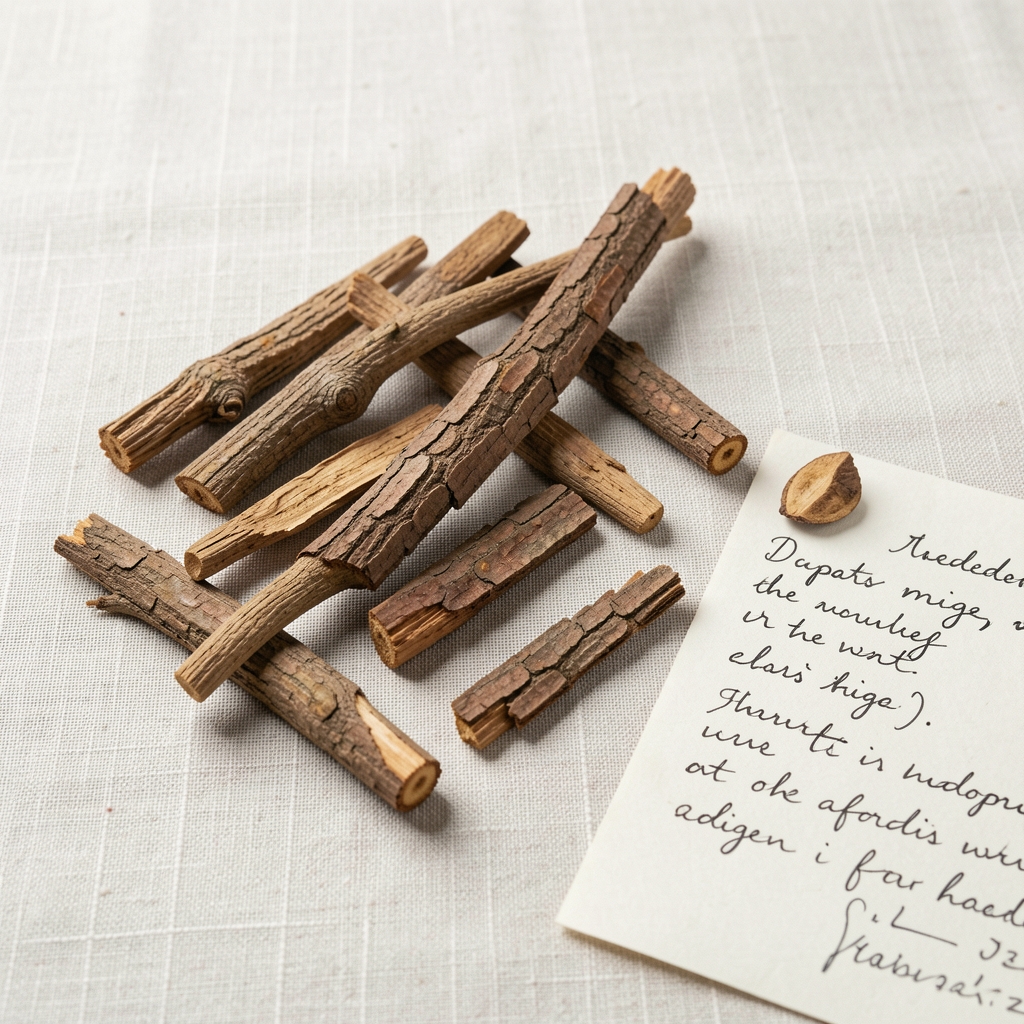
IMG — 038B — Documentation review. Jakarta studio, 2026.
One of the more meaningful signals of formulation integrity is the existence of independent batch verification — third-party testing that confirms the declared contents of a product and checks for contaminants not visible on the label. Active ingredients are sourced from documented suppliers, with each batch accompanied by a certificate of composition.
In the Indonesian market, where the men's supplement category has grown substantially over the past several years, batch verification practices vary widely. Some producers make batch-test certificates available on request or via a QR code on the packaging. Others do not publish this information and offer no mechanism for the reader to verify it independently.
The difference matters beyond simple quality assurance. Batch verification is also one of the few available proxies for the stability of an ingredient's sourcing chain. A manufacturer who tests every batch is implicitly confirming that they have a consistent relationship with their suppliers — a relationship stable enough to be monitored. A manufacturer who does not publish batch results offers no equivalent assurance.
"The gap between what a label says and what a formulation is can be closed, slowly, by documentation. Sourcing records, batch certificates, ingredient origin maps."
The phrase “whole-food sourced” has become one of the more visible marketing claims in the men's supplement space. It appears on products ranging from mineral complexes to adaptogen blends to protein-rich nutrition formulations. What it means in practice is less standardised than the frequency of its use might suggest.
In the most rigorous interpretation, whole-food sourced refers to ingredients that are derived from an identifiable whole food and retain the co-factors present in that food — the fibre, the phytonutrients, the associated vitamins and minerals that accompany the primary compound in its natural context. In a looser interpretation, it may simply mean that a synthetic compound was replaced with a natural extract, without any further commitment to the preservation of those co-factors.
A reader who encounters the term on a label and wants to understand which interpretation applies is well advised to look for secondary documentation: the ingredient origin map, if one exists; the supplier's published quality standards; the batch verification process. In the absence of this documentation, the term remains a claim without a verifiable referent.
The following observations reflect the archive's current position on ingredient label legibility. They are not a checklist, and they are not prescriptive. They are notes from an ongoing process of documentation.
Kaldo Letters is an independent editorial publication focused on everyday wellness practices. The publication is not affiliated with any commercial, governmental, or institutional body. Articles published here are editorial in nature and reflect the writers' observations on everyday wellness practices. The content is not intended as professional advice. Readers with specific concerns about their daily routines are encouraged to speak with a qualified wellness professional.

Eleanor Whitfield is a senior editor at Kaldo Letters, where she has covered the intersection of daily nutrition, ingredient sourcing, and men's wellness practices since 2022. Her editorial background spans independent publishing and nutritional communications.
More from this author →